
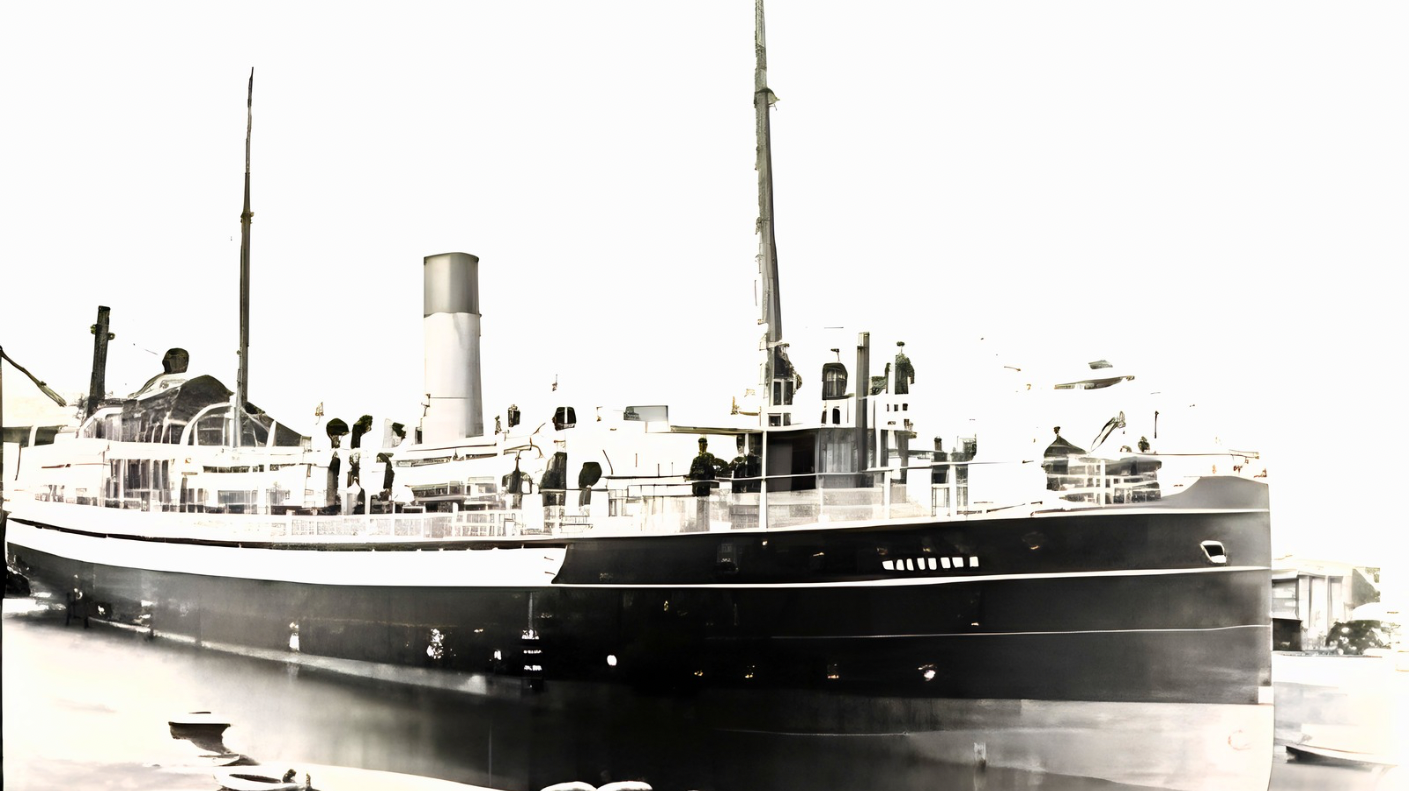

On November 8, 1888, a steamer carrying hundreds of passengers from Mandvi towards Mumbai disappeared in a devastating cyclone off the Saurashtra coast. The tragedy, remembered as the sinking of Haji Kasam’s Vijli, remains one of the most heartbreaking chapters in Gujarat’s maritime history.
November 8 holds a special place in the history of Kutch, but not for a celebration. On this day in 1888, the SS Vaitarna, popularly known as Vijli, embarked on what would become its final voyage from Mandvi Port in Kutch towards Mumbai. Caught in a severe cyclonic storm in the Arabian Sea, the vessel disappeared with hundreds of passengers and crew members on board.
Today, 138 years later, the tragedy continues to live in the collective memory of Kutch and Gujarat through historical accounts, folk songs and literature.
The Steamer Known as ‘Vijli’
Built in 1885 at Grangemouth Dockyard in Scotland, the SS Vaitarna was a coastal passenger steamer owned by Shepherd & Company of Bombay and registered in Glasgow.
The vessel was named after the Vaitarna River. However, what made it particularly distinctive for its time was its electric lighting system. As electric lights were still a relatively new technology, people began referring to the vessel affectionately as Vijli, meaning lightning.
The steamer had travelled from Scotland to India and was operating along the western coast, connecting important ports and facilitating passenger movement between Kutch, Saurashtra, Karachi and Bombay.
The Final Voyage from Mandvi on November 8, 1888
On Thursday, November 8, 1888, coinciding with the auspicious occasion of Labh Pancham, SS Vaitarna arrived at Mandvi around noon, reportedly a day later than scheduled.
Despite deteriorating weather conditions and warnings of a cyclonic storm over the Arabian Sea, the vessel departed from Mandvi towards Dwarka.
Mandvi was an important maritime centre, and people from different parts of Kutch travelled there to board ships bound for Bombay. The passengers included traders, families, students and people travelling for various personal and professional reasons.
Historical accounts suggest that approximately 520 passengers boarded the vessel at Mandvi.
13 Wedding Processions and Students Among the Passengers
One of the most heartbreaking aspects of the tragedy was the presence of 13 wedding parties travelling aboard the steamer. Several grooms and members of their wedding processions were heading towards their destinations, unaware that the journey would turn into a disaster.
The vessel also carried students from Kutch and Saurashtra travelling to Bombay to appear for matriculation examinations conducted by the University of Bombay during that period.
For these students, the journey represented an opportunity to pursue education and build a future. For the wedding parties, it was meant to be a journey of celebration. Neither could have imagined the tragedy awaiting them.
From Dwarka to the Storm-Stricken Saurashtra Coast
After leaving Mandvi, the steamer reached Dwarka, where some passengers disembarked and additional passengers reportedly boarded.
Historical accounts record approximately 703 passengers and 43 crew members, taking the total number of people aboard to around 746.
The vessel subsequently proceeded towards Porbandar. However, severe weather conditions prevented it from making a proper stop there.
As the storm intensified, SS Vaitarna continued its journey along the Saurashtra coastline. It was reportedly sighted near the Mangrol coast during the evening.
Thereafter, the vessel disappeared amid the violent cyclonic conditions.
By the following day, the steamer was reported missing. It was feared that the vessel had sunk with everyone aboard. No confirmed survivors or identifiable wreckage were found, leaving the tragedy surrounded by uncertainty.
The Investigation into the Maritime Disaster
Following the disappearance of SS Vaitarna, a Marine Court of Inquiry was constituted to investigate the incident.
Historical accounts of the inquiry highlighted concerns regarding the vessel’s safety arrangements, including the adequacy of lifeboats and life-saving equipment.
The disaster also raised serious questions about passenger safety and preparedness for extreme weather conditions in coastal shipping during the nineteenth century.
Although the exact circumstances of the sinking remain uncertain, the loss of hundreds of lives made the incident one of the most devastating maritime tragedies associated with Gujarat.
‘Haji Kasam, Your Vijli Was Lost in the Middle of the Sea’
The tragedy did not remain confined to historical records. Over the years, it became deeply embedded in Gujarati folk culture.
The sinking inspired several folk songs, stories and literary works. Noted Gujarati writer and folklorist Zaverchand Meghani collected and documented folk compositions associated with the tragedy.
One of the most memorable lines associated with the incident is:
“Haji Kasam, tari Vijli re madhdariye veran thai…”
The tragic story also inspired Gujarati novelist Gunvantrai Acharya, who wrote Haji Kasam Tari Vijli, bringing the maritime disaster into Gujarati literature.
138 Years Later, Mandvi Still Remembers
Mandvi has shared a deep relationship with the sea for centuries. Its historic shipbuilding traditions, maritime trade and connections with ports across the Arabian Sea have played an important role in shaping the identity of Kutch.
The sinking of SS Vaitarna remains a reminder of this maritime heritage and the human tragedies associated with sea travel in an era when navigation and safety technology were limited.
On November 8, 1888, a vessel departed from Mandvi carrying hundreds of people with hopes, plans and dreams. It never returned.
138 years later, the story of Haji Kasam’s Vijli remains more than a maritime tragedy. It is a part of Kutch’s history, Gujarat’s folk memory and Mandvi’s enduring connection with the Arabian Sea.